Quick answer: for a beach-focused trip, whether with family or as a couple, Midoun is the safest first choice. It has the island's best sandy beaches, most of the boutique hotels, guesthouses and residences with a pool, and the strongest restaurant scene by the coast. Houmt Souk, Djerba's main town, suits travelers who want the old medina, the souks and a proper Tunisian town atmosphere within walking distance of where they sleep. Erriadh, the village behind the Djerbahood street art project, is best for a short, art-focused stop. The west coast, around Sidi Jmour and Ajim, is the quietest and least touristy part of the island, better suited to repeat visitors or anyone wanting to get away from the main resort strip. The right zone really depends on what you are after: beach and rest, culture, or something off the beaten path.
Midoun and its beach area
Midoun is the largest town inside Djerba's tourist zone, close to the beaches on the north-east coast around Sidi Mahrez and further south toward Aghir. This is where most of the accommodation sits: large beachfront hotels, but also the majority of the island's boutique hotels and residences, usually set back a little, often with a garden and a pool. Midoun has its own everyday life too, a busy Friday market, shopping streets, restaurants and several rooftop bars that keep evenings going. It is also the most practical base for exploring the rest of the island, whether you head north to Houmt Souk or across to Djerbahood and the west coast.
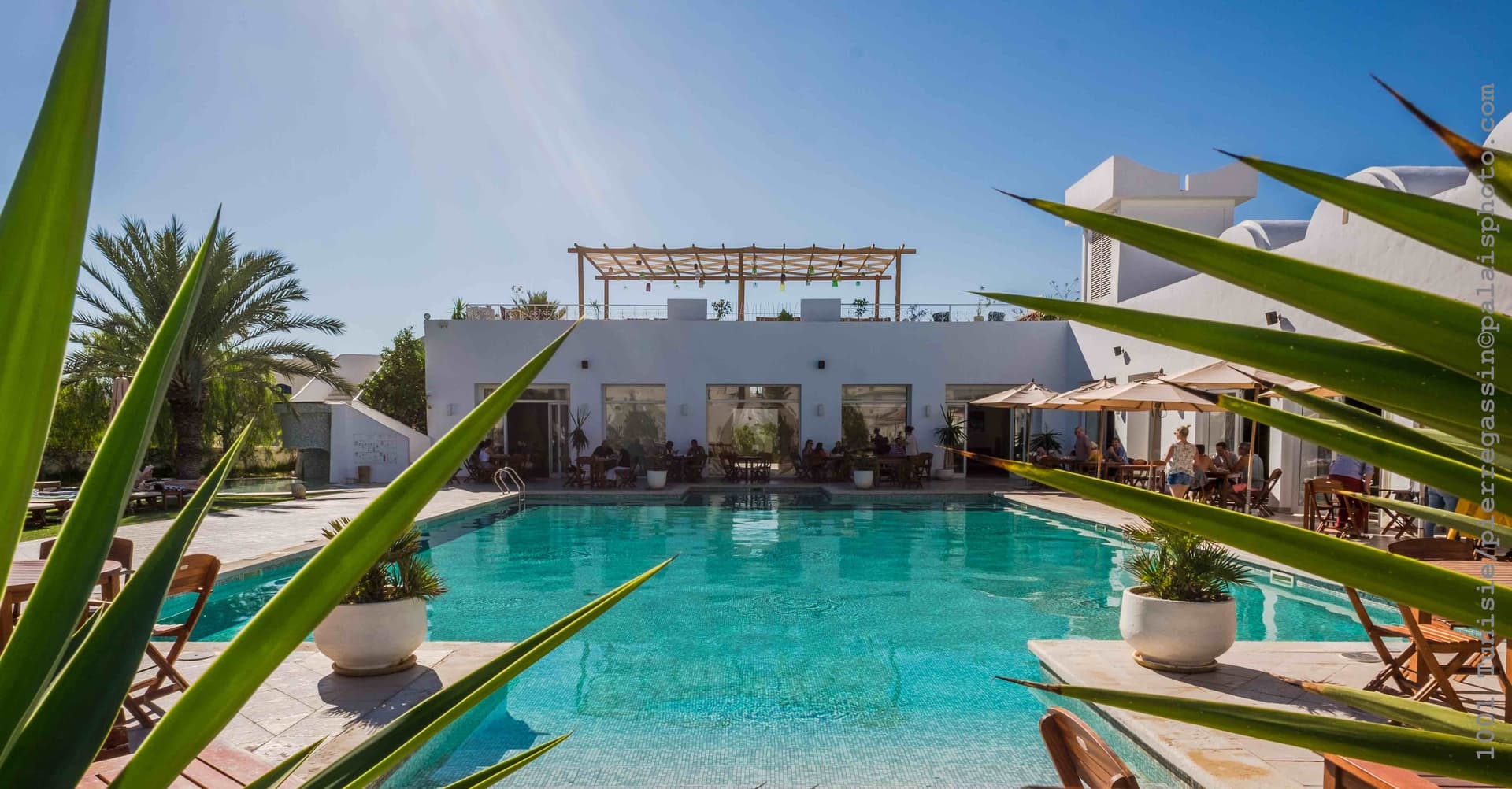
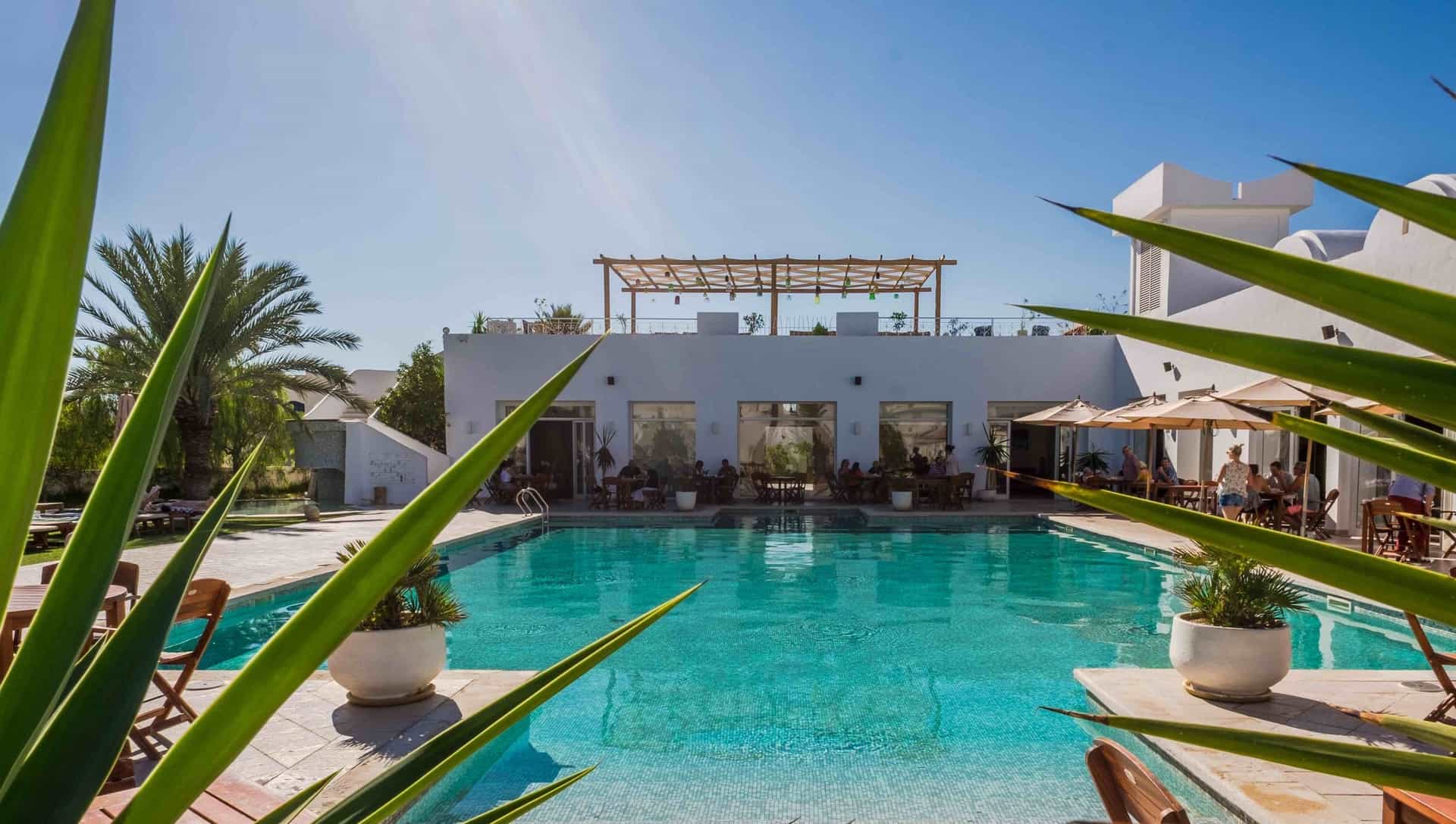
Among Midoun's boutique hotels, Les Jardins de Toumana stands out as a small, family-run hotel residence, a proper alternative to the all-inclusive resort format. It works as an aparthotel: Junior Family Suites and two-level Duplex Suites that sleep up to 6, all with a kitchenette and a private terrace, set in a residence with a pool and gardens. Add a Tunisian and Mediterranean restaurant, Tazzert, open to outside guests as well, and a rooftop bar, La Tavla, with live music evenings. It suits families who want their own space and their own meal times while keeping the service and shared spaces of a hotel. See the suites.
Houmt Souk, the town with character
Houmt Souk is Djerba's capital and its only real town, with a historic medina, covered souks, art galleries and a working fishing port. This is the zone to pick if you want to walk to the shops, eat dinner down a side street rather than on a hotel terrace, and get a stronger sense of everyday Tunisia outside the purely touristic areas. Accommodation here looks different from Midoun: smaller hotels and guesthouses in or around the medina, fewer large residences with a pool. The trade-off is that Djerba's best beaches are not within walking distance, expect a ten to twenty minute drive to reach the coast. Houmt Souk still makes an excellent choice for one or two nights on top of a beach stay in Midoun, or as a base for travelers without a car who prefer to do everything on foot.
Erriadh and Djerbahood
The village of Erriadh, about twenty minutes from Houmt Souk, is home to the Djerbahood project: several hundred murals painted by artists from around the world since 2014, which turned the village's lanes into an open-air gallery. Erriadh is also where the El Ghriba synagogue stands, one of the oldest still in use anywhere in the world, and a place of pilgrimage. The area has a handful of guesthouses and boutique stays, often renovated old houses, in a calm setting very different from Midoun. Erriadh suits a short stay, one or two nights, built around art and heritage, rather than a beach holiday: the nearest beach is a drive away.
The west coast: Sidi Jmour and Ajim
Djerba's western shore, around Sidi Jmour and the port of Ajim, is the least developed part of the island from a tourism standpoint. Ajim is best known for its car ferry to Jorf on the mainland and for fishing villages that still feel genuinely working, not staged for visitors. Nearby, the village of Guellala is known for its traditional pottery. This zone tends to attract travelers who already know Djerba and want to get away from the crowds, or anyone chasing sunset views over the strait without Midoun's density. Accommodation is limited here, with few larger properties, which makes it better suited to a day or two of exploring than a full stay.
Which zone for which traveler
- Families: Midoun, for easy beach access, self-catering aparthotel suites with kitchenettes, and pools that make days with kids much simpler.
- Couples: Erriadh for a quiet, heritage-driven atmosphere, or a boutique hotel in Midoun to combine beach time with a calm garden setting.
- Culture-focused travelers: Houmt Souk and Erriadh, for the medina, the galleries and the El Ghriba synagogue.
- Budget travelers: Houmt Souk has more simple, in-town accommodation, and the west coast tends to be cheaper overall due to lower demand.
Many visitors do not pick a single zone and stay put for the whole trip. Djerba is small enough to rent a car and treat the island as a loop: sleep in Midoun for the beach, spend a day in Houmt Souk for the medina and the souks, and add an afternoon in Erriadh for Djerbahood. Public transport exists between the main towns but gets thin once you leave them, so a car or an organized taxi makes moving between zones much easier, especially on a stay of a week or longer.
For more on the island, our Djerba guide breaks down the highlights zone by zone, and our things to do in Djerba guide covers the beaches, activities and day trips worth building a stay around. For dinner on site, restaurant Tazzert also welcomes visitors passing through.
FAQ: where to stay in Djerba
What is the most beautiful part of Djerba? It depends what you are looking for. The best-known beaches sit on the north-east coast, around Sidi Mahrez and toward Aghir, inside the Midoun zone. For heritage and character, Erriadh's murals or the Houmt Souk medina usually come out on top. There is no single "most beautiful part", just a zone that fits better depending on whether you want beach, art or an old town.
Where should families stay in Djerba? Midoun is the most practical choice: close beaches, pools, and boutique hotels with self-catering suites like Les Jardins de Toumana, whose kitchenettes are useful for feeding kids and keeping nap times flexible.
Hotel or guesthouse in Djerba? The large hotels along the strip between Midoun and Aghir mostly run on an all-inclusive model, convenient but fairly standardized. Guesthouses and boutique hotels are smaller, often family-run, with more personal service and more local cooking. A hotel residence like Les Jardins de Toumana adds a kitchenette and a private terrace, a better fit if you want to go out and explore the island's restaurant scene rather than stay on-site.
How many nights should I plan for Djerba? Five to seven nights let you combine the beach, a trip into Houmt Souk, a visit to Djerbahood and possibly Guellala on the west coast. For a simple beach break, three nights work, but leave little time to explore beyond the sand.
What is the best season to visit Djerba? Spring (April to June) and autumn (September-October) offer the best conditions: warm but manageable heat, sea temperatures already comfortable or still holding, and smaller crowds than summer. July and August are the hottest and busiest months. Winter stays mild, though some restaurants and activities run on reduced hours.